Water damage restoration that dries it right the first time
Burst supply lines, roof leaks, AC overflows, appliance failures and storm intrusion. We extract the water, find where it went, dry the structure to a verified standard and rebuild what has to come out.
- 24/7 emergency extraction
- IICRC S500 drying
- Moisture mapping and drying logs
- In-house rebuild
Water moves fast. Hidden moisture is what causes the real damage.
In South Florida, water that sits in drywall, baseboards, cabinets and subfloors can support mold growth within days. The visible puddle is rarely the whole story. Water wicks up walls, travels under flooring and saturates insulation and cabinet bases where you cannot see it.
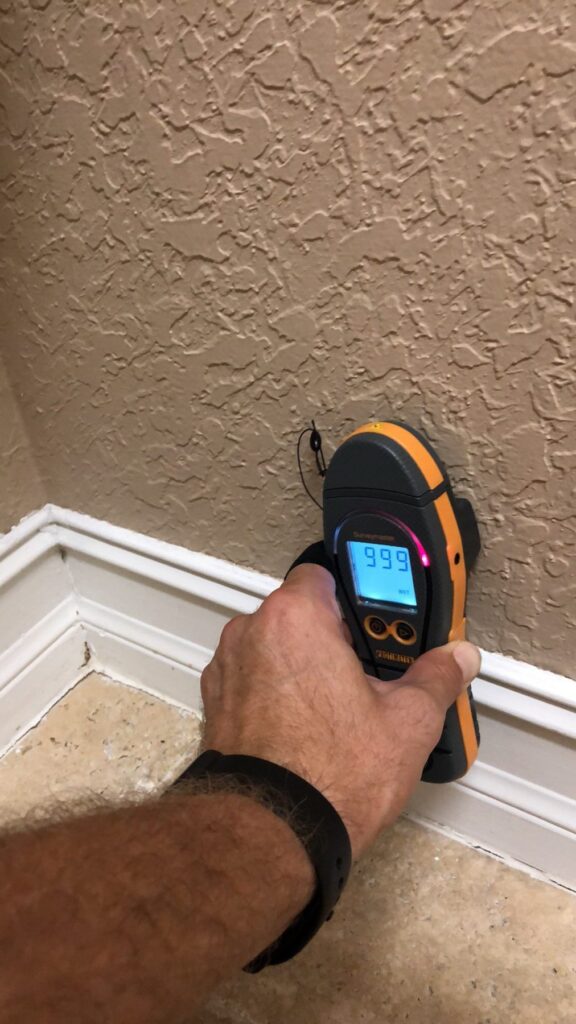
Firstline follows the IICRC S500 standard for professional water damage restoration. We classify the water source, map the moisture with meters and thermal imaging, and set up a drying plan sized to the job. We remove only what cannot be dried, and we document every reading so you and your adjuster can see the property reached dry standard before anything is closed up.
When the drying is done, our licensed general contractor team handles the rebuild: drywall, insulation, baseboards, flooring, cabinets and paint. One company, one schedule, no gap between mitigation and repairs.
Call right away if you have
- Water actively leaking or standing in the property
- Wet drywall, swelling baseboards or buckling floors
- A ceiling stain, sagging ceiling or dripping light fixture
- A musty odor after a leak or storm
- Water from a sewage backup or outside flooding
From first call to final repair
Every water loss follows the same disciplined sequence, documented at each step.
Stop the source and extract
We help stop the water source, then extract standing water with truck-mounted or portable extraction.
Inspect and map moisture
Moisture meters and thermal imaging show how far the water traveled into walls, floors and ceilings.
Controlled demolition
We remove materials that cannot be dried or are contaminated, following the water category and S500 guidance.
Structural drying
Air movers and dehumidifiers are placed to the drying plan, with readings logged until materials reach dry standard.
Rebuild
Drywall, insulation, flooring, cabinets, trim and paint by our licensed GC team, back to pre-loss condition.
Water damage services
Water extraction
Removal of standing water from floors, carpet and cavities.
Leak and moisture detection
Moisture mapping and thermal imaging to find hidden water.
Structural drying
Commercial dehumidifiers and air movers with daily monitoring.
Contaminated water cleanup
Sewage and flood water handled as Category 3, with proper PPE and disposal.
Claim documentation
Photos, moisture logs, equipment records and a written scope.
Reconstruction
Licensed GC repairs from drywall to cabinets and flooring.
Drying and rebuilding under one license
Water losses go sideways when the drying company and the rebuild contractor are two different businesses. Scope disagreements, schedule gaps and finger-pointing are common. Firstline is a licensed general contractor and an IICRC Certified Firm, so the same team that dries the structure puts it back together.
Our work is led by Scott Gordon, who holds the IICRC Water Restoration Technician certification and serves on the IICRC WRT exam review committee.
- Florida Certified General Contractor CGC1530039
- Florida Certified Roofing Contractor CCC1334142
- Licensed Mold Remediator MRSR 2865 and Mold Assessor MRSA 2655
- IICRC Certified Firm
- Mitigation, roofing and rebuild by one company
Frequently asked questions
How long does drying take?
Most residential water losses take three to five days of drying, but it depends on the materials, how long they were wet and the water category. We take readings daily and remove equipment when the materials reach dry standard, not on a fixed schedule.
Do I have to remove all the wet drywall?
Not always. Clean water (Category 1) caught early can often be dried in place. Contaminated water, long-term saturation or materials that will not dry in a reasonable time need to be removed. We make that call from readings, not guesswork.
Will my insurance cover water damage?
Coverage depends on your policy and the cause of loss, and only your carrier can determine that. We document the damage thoroughly and work with your adjuster. We do not interpret policies, and you are responsible for any deductible.
Can I stay in my home during drying?
Often yes. Drying equipment runs continuously and is noisy, and some areas may be contained. If there is contaminated water or extensive demolition, we will tell you if staying is not advisable.
What if mold has already started?
Florida law requires mold remediation to be performed by a licensed mold remediator. Firstline holds that license, so we can address mold under the proper protocol rather than simply drying over it.
Often needed together
Mold Remediation
State-licensed remediation with containment, HEPA filtration and clearance.
Learn more →
Learn more from our blog
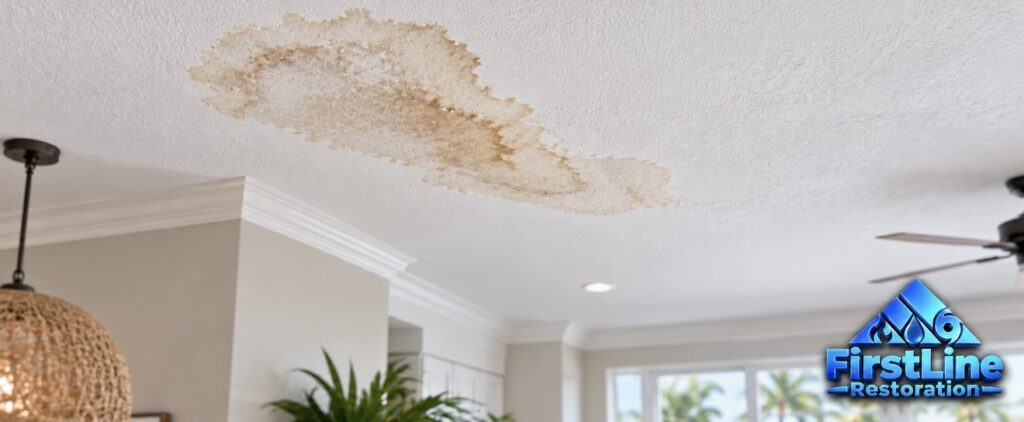 Should Wet Drywall Be Removed After a Leak? A South Florida GuideRead the article →
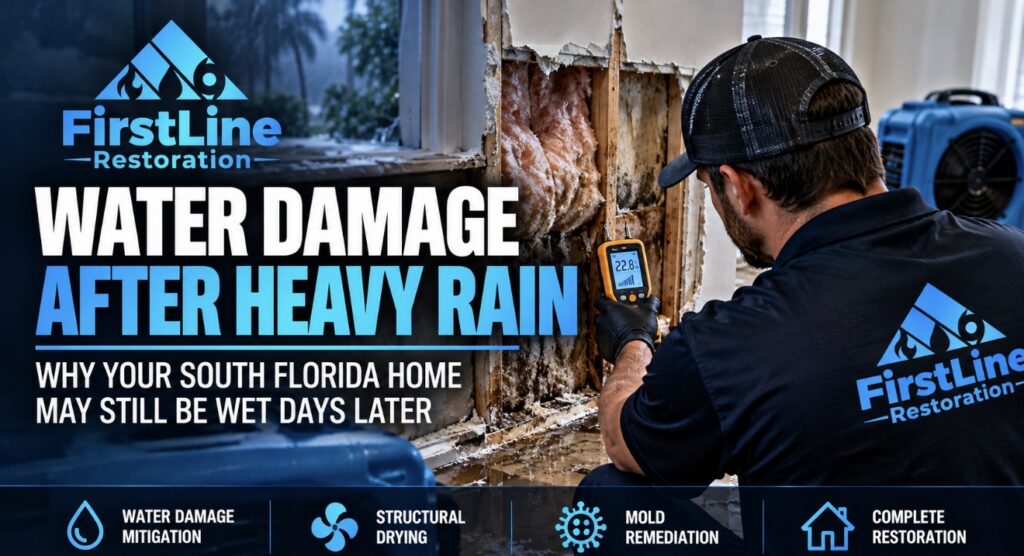 Water Damage After Heavy Rain: Why Your South Florida Home May Still Be Wet Days LaterRead the article →
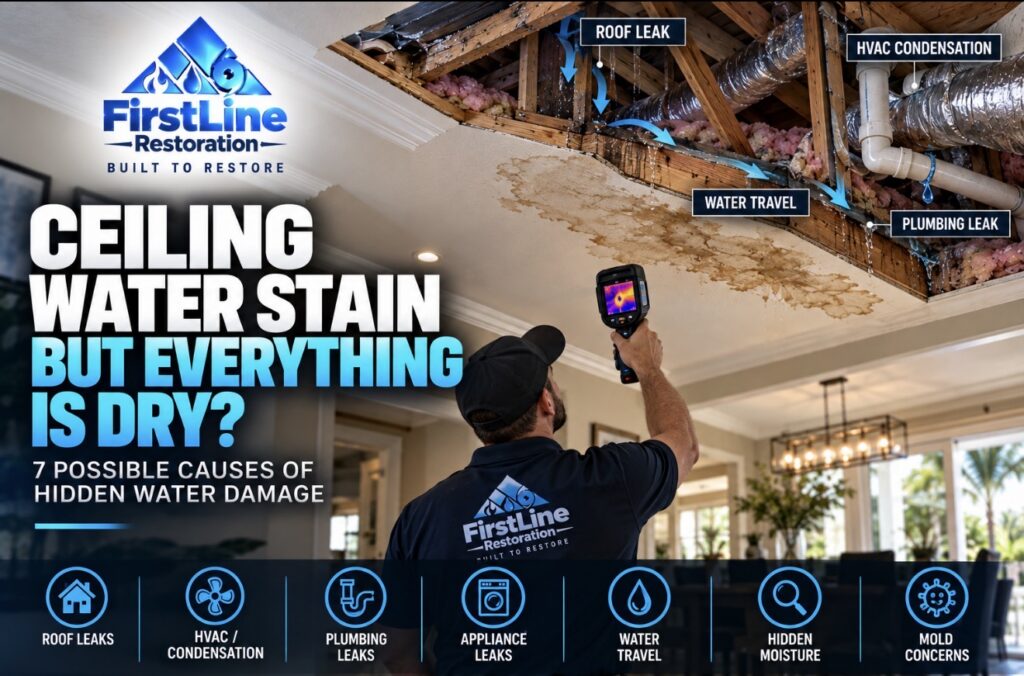 Ceiling Water Stain but Everything Is Dry? How to Find the Source of Hidden Water DamageRead the article →
Water in the building right now?
Call now. The sooner extraction starts, the less has to be torn out.