
Licensed mold remediation, done to standard and verified
Mold in South Florida almost always traces back to water: a slow leak, an AC problem or a past loss that was never dried properly. We contain it, remove it, fix the moisture source and rebuild, under a Florida mold remediation license.
- FL Licensed Mold Remediator MRSR 2865
- IICRC S520 protocols
- Containment and HEPA filtration
- In-house rebuild
Removing mold is only half the job. Stopping the moisture is the other half.
Wiping or painting over mold does not solve the problem. Growth inside wall cavities, behind cabinets, around water heaters and in AC closets keeps spreading as long as moisture is present, and disturbing it without containment can spread spores to clean areas of the building.
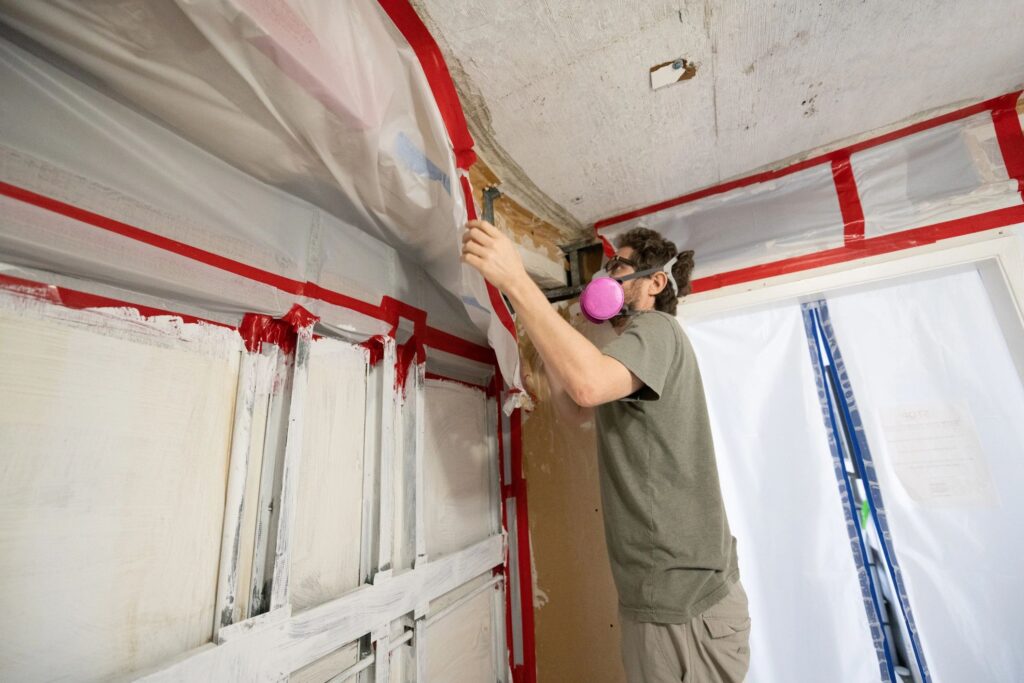
FirstLine performs remediation following IICRC S520 guidance: we set up containment and negative air pressure, run HEPA air filtration, remove affected porous materials, clean and treat remaining surfaces and HEPA vacuum the work area. Just as important, we identify and correct the moisture source so the problem does not return.
Florida law separates mold assessment from mold remediation on the same project. When an assessment or post-remediation clearance is needed, it is performed by an independent licensed mold assessor, which keeps the result objective for you, your buyer or your carrier.
Signs you may have a mold problem
- Musty odor that does not go away
- Visible growth on drywall, baseboards or ceilings
- Staining or bubbling paint after a leak
- Mold around AC vents, air handlers or closets
- A past leak that was never professionally dried
How mold remediation works
A controlled, documented process designed to remove mold without spreading it.
Assessment and scope
An independent licensed assessor defines the affected areas when required, and we prepare the remediation scope.
Containment
Poly containment, zip doors and negative air keep spores from reaching unaffected rooms.
Removal and cleaning
Affected porous materials are removed and bagged; framing and surfaces are cleaned and HEPA vacuumed.
Moisture correction
We address the leak, humidity or drainage problem that caused the growth.
Clearance and rebuild
After clearance, our licensed GC team rebuilds walls, cabinets and finishes.
Mold remediation services
Containment and negative air
Isolation of the work area to protect the rest of the property.
HEPA air filtration
Air scrubbers to capture airborne spores during and after work.
Material removal
Controlled removal of drywall, insulation, baseboards and cabinetry.
Source investigation
Finding the leak, condensation or humidity issue behind the growth.
Documentation
Photos, scope and protocol records for owners, buyers and carriers.
Reconstruction
Drywall, insulation, cabinets and paint by our licensed GC team.
Licensed for remediation and the rebuild
Mold remediation in Florida requires a state license. FirstLine holds both a mold remediator license and a mold assessor license, and we follow the separation the law requires on any single project.
Because we are also a Certified General Contractor, the rebuild after clearance stays with the same company instead of being handed to someone new.
- Florida Certified General Contractor CGC1530039
- Florida Certified Roofing Contractor CCC1334142
- Licensed Mold Remediator MRSR 2865 and Mold Assessor MRSA 2655
- IICRC Certified Firm
- Mitigation, roofing and rebuild by one company
Frequently asked questions
Do I need a mold assessment first?
Not every job requires one, but an independent assessment is recommended for larger areas, health concerns, real estate transactions and insurance claims. It gives a clear scope and a basis for clearance testing afterward.
Can you assess and remediate the same property?
No. Florida law does not allow the same company to perform both the assessment and the remediation on the same project. We coordinate with independent licensed assessors when an assessment or clearance is needed.
Can I stay home during remediation?
Usually yes, if the work area is contained and you stay out of it. For large projects or occupants with health concerns, temporary relocation may be advisable. We will tell you our recommendation up front.
Will bleach or a store-bought spray fix it?
Surface sprays do not address growth inside porous materials or wall cavities, and they do nothing about the moisture causing it. Porous materials with growth generally need to be removed.
Does insurance cover mold?
Many policies limit or exclude mold, and coverage often depends on whether it resulted from a covered water loss. Only your carrier can determine coverage. We provide thorough documentation and work with your adjuster.
Often needed together
Water Damage Restoration
Extraction, structural drying and moisture mapping to IICRC S500.
Learn more →
24/7 Emergency Response
Water extraction, tarping, board-up and containment, day or night.
Learn more →
Learn more from our blog
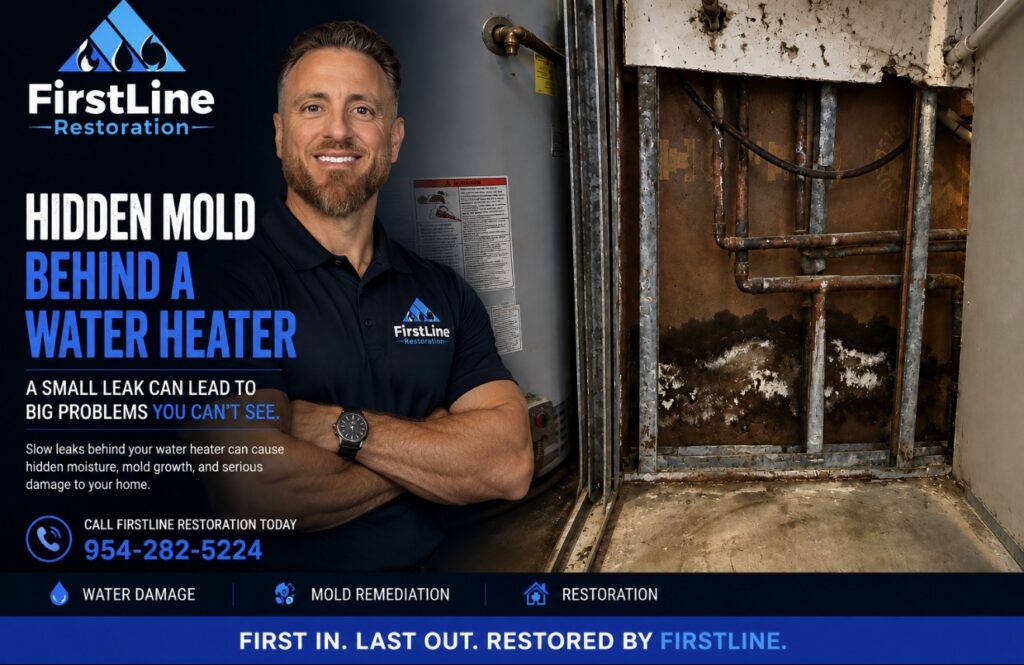 Hidden Mold Behind a Water Heater: What South Florida Property Owners Need to KnowRead the article →
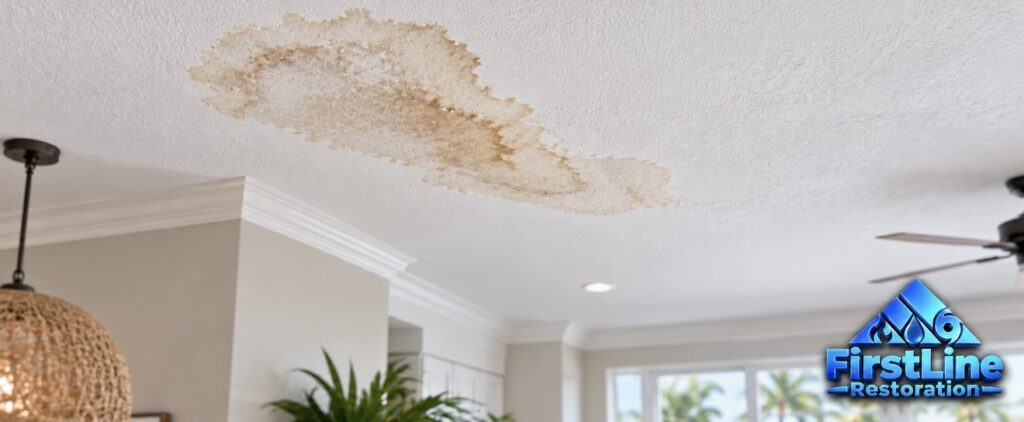 Should Wet Drywall Be Removed After a Leak? A South Florida GuideRead the article →
Seeing or smelling mold?
Call us to talk through what you are seeing and schedule an inspection.