
You discover a leak under the kitchen sink. The plumber fixes the pipe, you wipe up the water, and by the next morning the floor looks dry.
So, is the problem solved?
Sometimes it is. But depending on how much water escaped, how long it was there, and where it traveled, moisture can remain inside building materials long after the visible water is gone.
Water can move beneath flooring, behind baseboards, into cabinets, and through wall cavities. If those areas aren’t evaluated, the damage may not become apparent until you notice a musty smell, swollen materials, or staining.
If you’ve experienced a leak or water damage in Coral Springs, here’s what to know about hidden moisture and when it makes sense to have your property checked.
Why Water Damage Isn’t Always Visible
Water doesn’t necessarily stay where you first discover it.
A leaking supply line beneath a bathroom vanity, for example, may send water into the cabinet and across the bathroom floor. It can also travel beneath the flooring or into a wall shared with an adjoining room.
The amount of visible water doesn’t always tell you how much moisture has been absorbed by the surrounding materials.
Water can become trapped in places such as:
- Behind baseboards and inside wall cavities
- Beneath tile, laminate, or wood flooring
- Under kitchen and bathroom cabinets
- Inside drywall and insulation
- Beneath carpet and padding
- Between layers of building materials
- Around door frames and adjoining rooms
Some materials may feel dry on the surface while still holding moisture below it. The source, duration, and extent of the leak all influence what needs to be checked.
Signs You May Have Hidden Water Damage
Not every water loss leaves an obvious puddle or stain. Some signs appear gradually, especially when moisture is trapped.
Look for:
- Baseboards that are swollen, separating, or discolored
- Flooring that is lifting, buckling, or feels unusually soft
- Cabinet materials that are swelling or delaminating
- Bubbling paint or peeling wall coverings
- Staining on walls or ceilings
- A persistent musty or damp odor
- Visible mold-like growth
- Damage that reappears after a leak was supposedly repaired
These signs don’t always identify the exact source of the problem. For instance, a ceiling stain may originate from plumbing, a roof leak, an air-conditioning issue, or another source.
An inspection helps determine where moisture is present and what may be causing it.
“The Plumber Fixed the Leak. Why Would I Need Restoration?”
A plumber’s job is to locate and repair the plumbing problem. That’s an essential first step.
But fixing the pipe doesn’t automatically remove water that has already entered the surrounding building materials.
For example, if a supply line leaked behind a vanity, the affected area may include the cabinet, drywall, baseboards, flooring, and an adjacent room. Those materials may need to be inspected and dried even though the plumbing repair is complete.
The same applies to an air-conditioning leak or a roof leak: stopping the source and addressing the resulting water damage are related but separate steps.
At Firstline Restoration, we help property owners evaluate water damage, identify affected areas, and determine what work may be needed to dry and restore the property.
How Professionals Find Hidden Moisture
A visual inspection is a starting point, but it may not reveal the full extent of water damage.
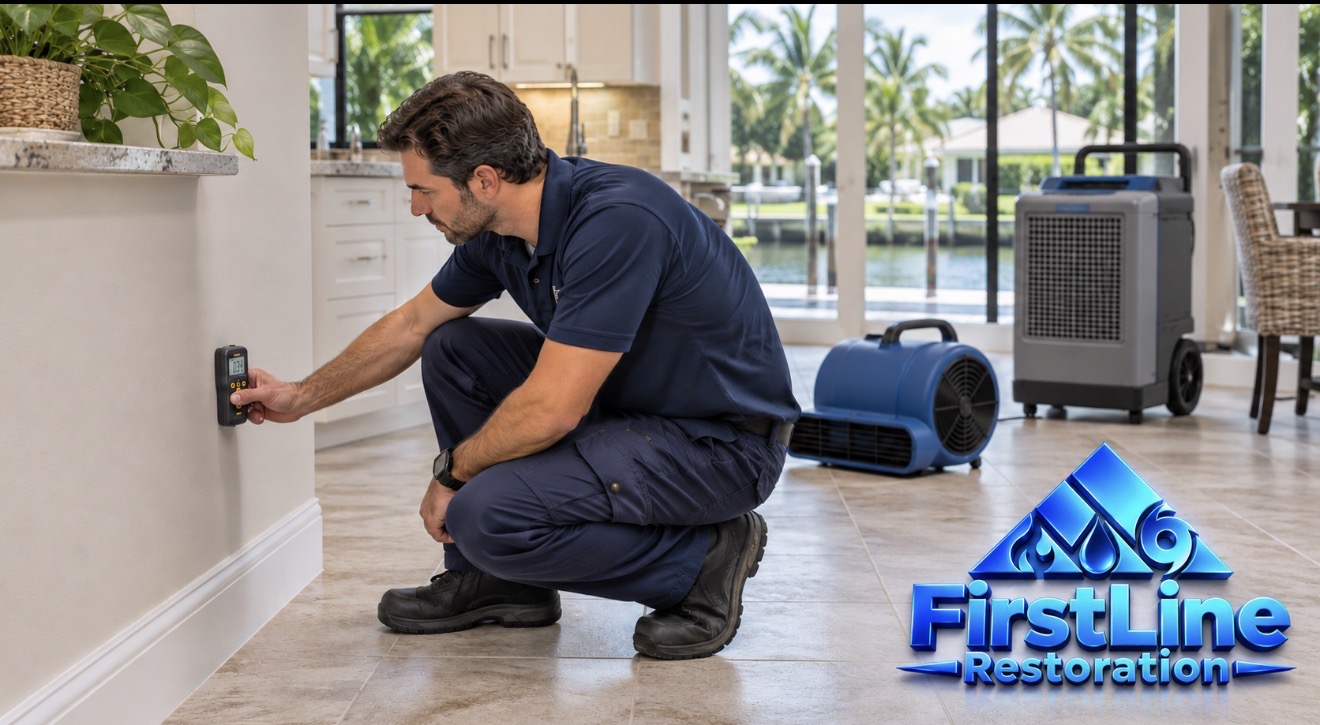
Depending on the situation, a restoration professional may use moisture meters and other tools to evaluate affected materials and surrounding areas.
The inspection may include:
- Identifying the water source. Where did the water come from, and has the source been stopped?
- Reviewing the history. How long may the leak have been active, and what areas were exposed?
- Inspecting affected materials. Walls, floors, cabinets, ceilings, and adjacent rooms may need to be checked.
- Taking moisture readings. Readings help identify areas that may be wetter than expected and guide further investigation.
- Documenting findings. Photos, readings, and notes help establish the condition of the property and track the drying process.
A moisture meter is a tool for investigation. Readings should be interpreted in context, including the material being tested, the instrument used, and comparison with appropriate unaffected areas. A single reading doesn’t tell the whole story.
What Happens During Water Damage Mitigation?
Water damage mitigation is the work performed to limit further damage after a water loss. The scope depends on the source of the water, the materials affected, and the conditions found.
A mitigation project may include:
- Addressing immediate safety concerns
- Stopping or arranging repair of the water source
- Extracting standing water
- Moving or protecting affected contents
- Evaluating and documenting moisture
- Removing materials that can’t be safely or effectively dried
- Installing appropriate drying and dehumidification equipment
- Monitoring conditions as drying progresses
Not every water loss requires demolition. Some materials may be suitable for drying in place; others may need to be removed because of their condition, the type of water involved, or the likelihood that they can be dried effectively.
The goal is to develop a scope based on the actual conditions—not simply assume every wet material must be removed or that every affected area can be saved.
How Quickly Should Water Damage Be Addressed?
As soon as it’s safe to do so.
Prompt action can help limit damage and improve the chances of saving some materials. The U.S. Environmental Protection Agency recommends drying water-damaged areas and items within 24 to 48 hours to help prevent mold growth.
That timeframe is guidance, not a guarantee. Drying within that period does not guarantee mold won’t develop, and missing it doesn’t mean mold has definitely developed. The conditions, materials, and extent of moisture all matter.
If the leak happened days ago—or you aren’t sure how long it was active—it’s still important to investigate and address the moisture.
Does Water Damage Always Cause Mold?
No. Water damage does not automatically mean mold is present.
However, moisture that remains in building materials can create conditions that support mold growth. Finding and correcting the source of moisture is essential; otherwise, a mold problem can return after cleanup.
Possible warning signs include visible growth, a musty odor, and materials that have remained damp. But a smell or stain alone doesn’t establish the full extent of a problem.
If you suspect mold, avoid disturbing the affected materials and have the area evaluated. The appropriate next steps depend on what is found and the scope of the affected area.
Can I Just Use Fans and a Household Dehumidifier?
For a small, straightforward spill that is cleaned up quickly, household drying may be sufficient. A larger leak or water that has reached concealed areas may require a more thorough evaluation and drying plan.
A fan can move air across a surface, but airflow alone doesn’t confirm that moisture beneath flooring, inside cabinets, or behind walls has been addressed.
Also, don’t use fans when sewage or other contamination is suspected. The EPA recommends consulting an experienced professional for contaminated water situations and advises against using fans before determining the water is clean or sanitary.
Before handling any water loss, consider electrical, slip, structural, and contamination hazards. If there is any doubt about safety, stay out of the affected area and seek professional assistance.
Should I Document the Damage for Insurance?
If you’re considering an insurance claim, document the damage as soon as it’s safe.
Helpful records can include:
- Photos and video of affected areas
- The date you discovered the leak
- Information about the suspected source
- Plumbing or other repair invoices
- Photos and descriptions of damaged belongings
- Mitigation documentation and moisture readings
Contact your insurance company or agent to discuss your policy, reporting requirements, deductible, and whether the loss may be covered. Coverage depends on the cause of the damage, the policy language, and the insurer’s determination.
Keep records of steps taken to protect the property and prevent further damage, but don’t put yourself at risk to gather documentation.
Frequently Asked Questions About Hidden Water Damage
Can drywall be wet behind the baseboard even if it looks normal?
Yes. Water can be absorbed behind or around baseboards without immediately creating a visible stain. An inspection can help determine whether the surrounding materials are affected.
Can water travel under tile flooring?
Yes. Depending on the installation and the path of the water, moisture may reach spaces or materials beneath the finished flooring. Whether tile or other materials need to be removed depends on the conditions found and the drying plan.
How long does professional drying take?
There is no single timeline for every property. Drying time depends on the materials involved, the amount and duration of water exposure, environmental conditions, and access to the affected areas. Moisture readings and ongoing monitoring help determine progress.
Do I need to remove wet drywall?
Not always. Some drywall exposed to clean water may be suitable for drying in place if its condition and the surrounding circumstances allow it. Other situations require removal. The EPA’s water damage cleanup guidance discusses how the response can vary by material and condition.
What if the water came from sewage?
Sewage and other potentially contaminated water require special precautions. Avoid contact with the affected water and materials, keep people and pets away from the area, and contact an experienced professional.
Need Water Damage Help in Coral Springs?
A leak may look small at first, but the water can travel farther than expected. Understanding where it went is an important step in deciding what needs to happen next.
Firstline Restoration provides water damage mitigation, drying, and reconstruction services for residential and commercial properties throughout Coral Springs and South Florida.
Call 954-282-5224 to discuss your property or schedule an inspection.
Learn more about Firstline Restoration and our services.
Florida General Contractor: CGC1530039
Florida Roofing Contractor: CCC1334142
Leave a Reply