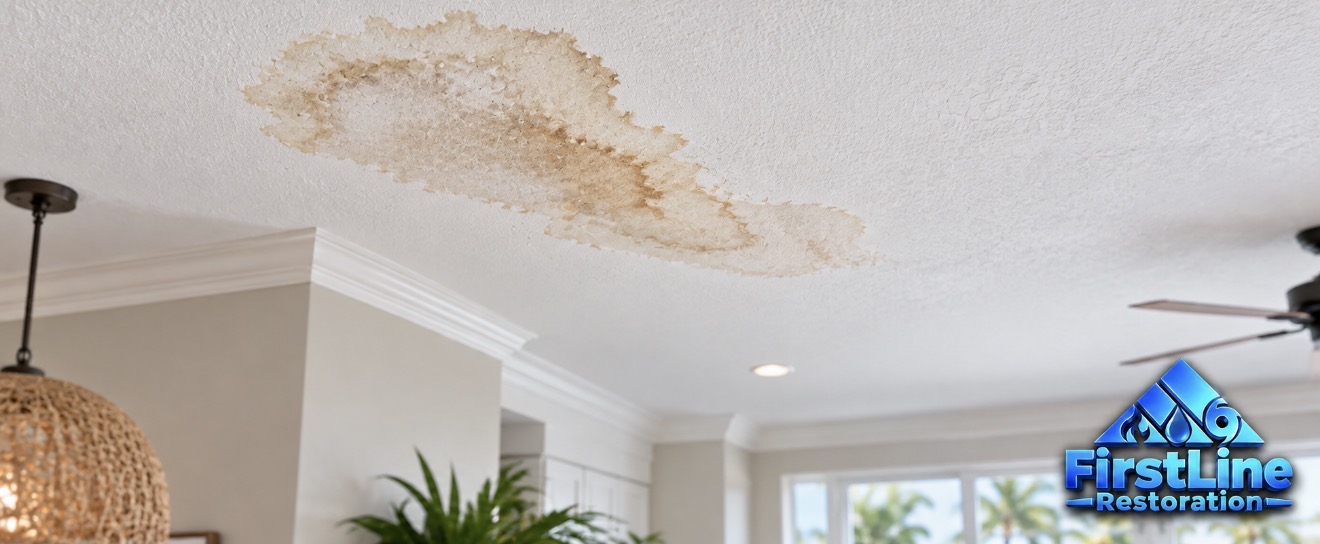
After a water leak, one of the first questions homeowners ask is: “Do we have to cut out the drywall?”
The answer depends on what got wet, how long it stayed wet, and whether the wall assembly can be dried and verified. Removing drywall without a clear reason can add unnecessary repair work. Leaving wet or damaged materials in place can create a different problem.
For Parkland and South Florida property owners, the important step is to evaluate the condition of the materials, not make the decision based on appearance alone.
When drywall may be dried in place
Drywall does not automatically have to be removed just because it was exposed to water. In its water-damage guidance, the EPA says wallboard may be dried in place when it has no obvious swelling and the seams remain intact.
That assessment also needs to account for what is behind the drywall. Insulation, framing, the back of the wallboard, and other concealed materials may be wet even when the room-side surface feels dry. Drying in place is only a reasonable option when the affected assembly can be accessed, dried, and monitored appropriately.
When removal may be necessary
Removal may be appropriate when drywall is swollen, soft, delaminated, deteriorating, or visibly affected by microbial growth. It may also be necessary when insulation or other concealed materials are wet and cannot be properly dried in place.
The water source matters, too. A clean supply-line leak presents different conditions from water that may contain sewage or other contaminants. The source and extent of the water should be understood before deciding how affected materials should be handled.
A qualified restoration professional can assess the visible damage, take moisture readings, evaluate accessible areas, and explain which materials can be dried and which may need removal.
Why South Florida homes need a careful drying plan
South Florida’s heat and humidity make it especially important to control moisture inside a building assembly. Setting up a dehumidifier or fan is not, by itself, proof that a wall is dry. Equipment placement and drying progress should be based on the materials affected and checked over time.
The EPA recommends drying damp or wet materials promptly to help prevent mold growth. Its guidance is condition-based: for example, intact, non-swollen wallboard may be treated differently from wallboard that is damaged or has mold growth. Read the EPA’s water-damage cleanup guidance for building materials.
What to do after discovering wet drywall
- Address the water source. If it is safe, shut off the water or contact the appropriate trade to stop the leak.
- Protect the area. Move belongings away from the affected wall and keep people clear of unsafe or contaminated areas.
- Document what you see. Take photos before materials are moved or removed, and note when the leak was discovered.
- Have the affected assembly evaluated. Moisture readings and access to concealed areas can help determine what is wet and what needs to happen next.
- Confirm drying before repairs. Don’t close the wall or apply new finishes until the affected materials have been properly evaluated and the moisture condition addressed.
Avoid cutting into a wall or installing drying equipment without knowing what is behind the surface or what type of water is involved.
Restoration and reconstruction should follow the findings
A sound restoration plan connects the water source, affected materials, drying process, any necessary removal, and the repairs that follow. FirstLine Restoration provides water damage restoration and mold remediation across Florida. When damaged materials need replacement, the project can continue into reconstruction.
For a Parkland home or property, the right scope comes from the conditions found on site. Wet drywall may be salvageable, or removal may be needed. The answer should be based on the material’s condition and whether the full affected assembly can be dried and verified.
Call FirstLine Restoration at 954-282-5224 for 24/7 response.
CGC1530039 | CCC1334142 | MRSA2655 | MRSR2865
Leave a Reply